Paperworks
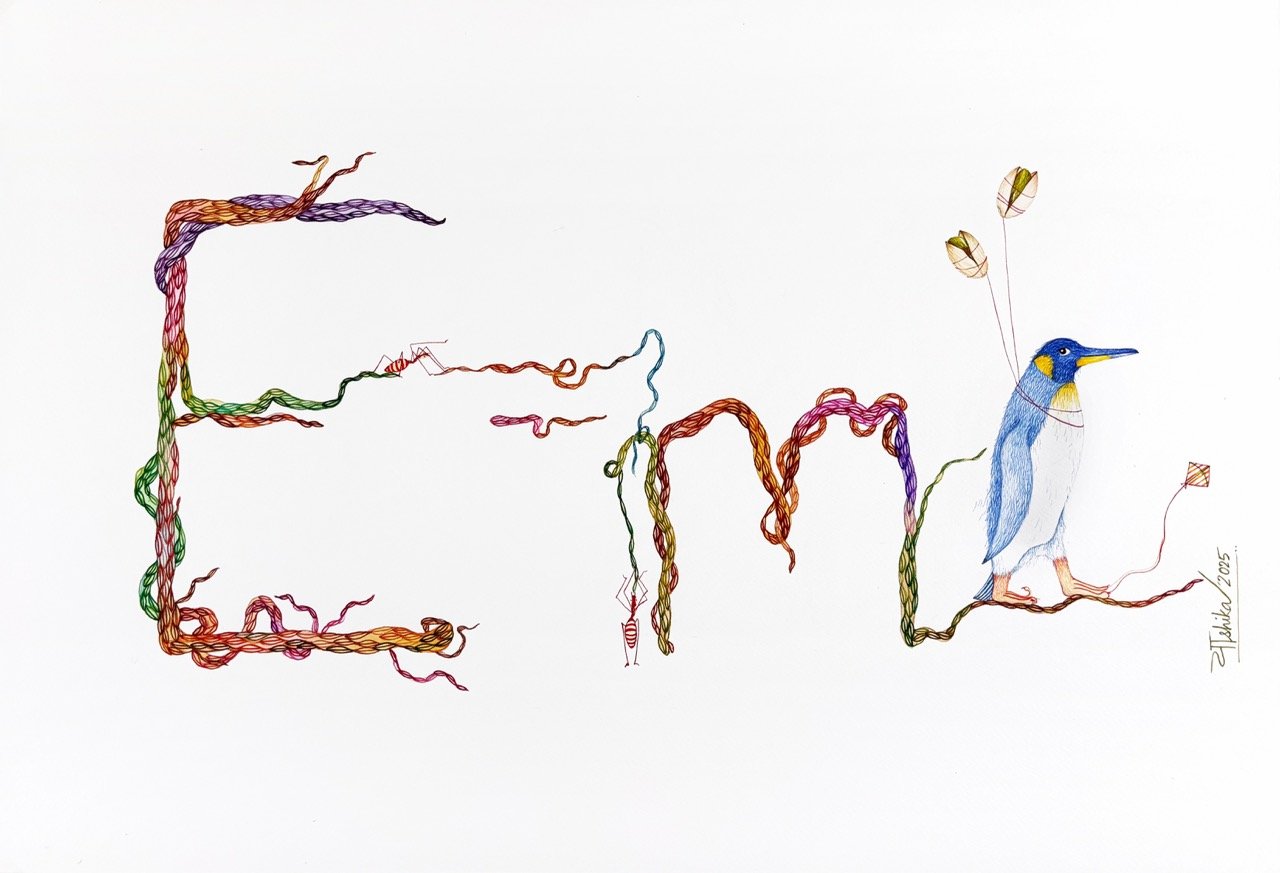
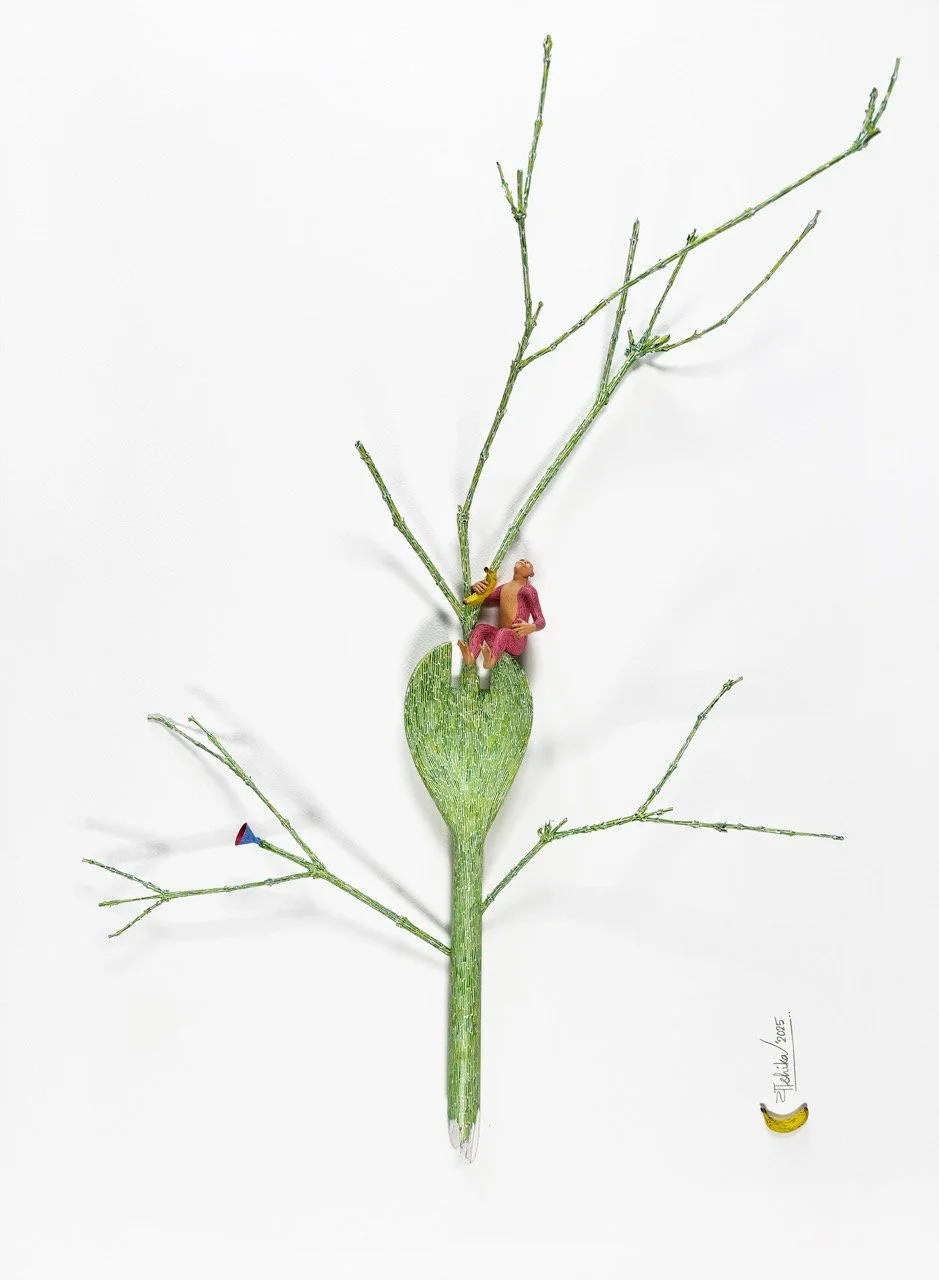
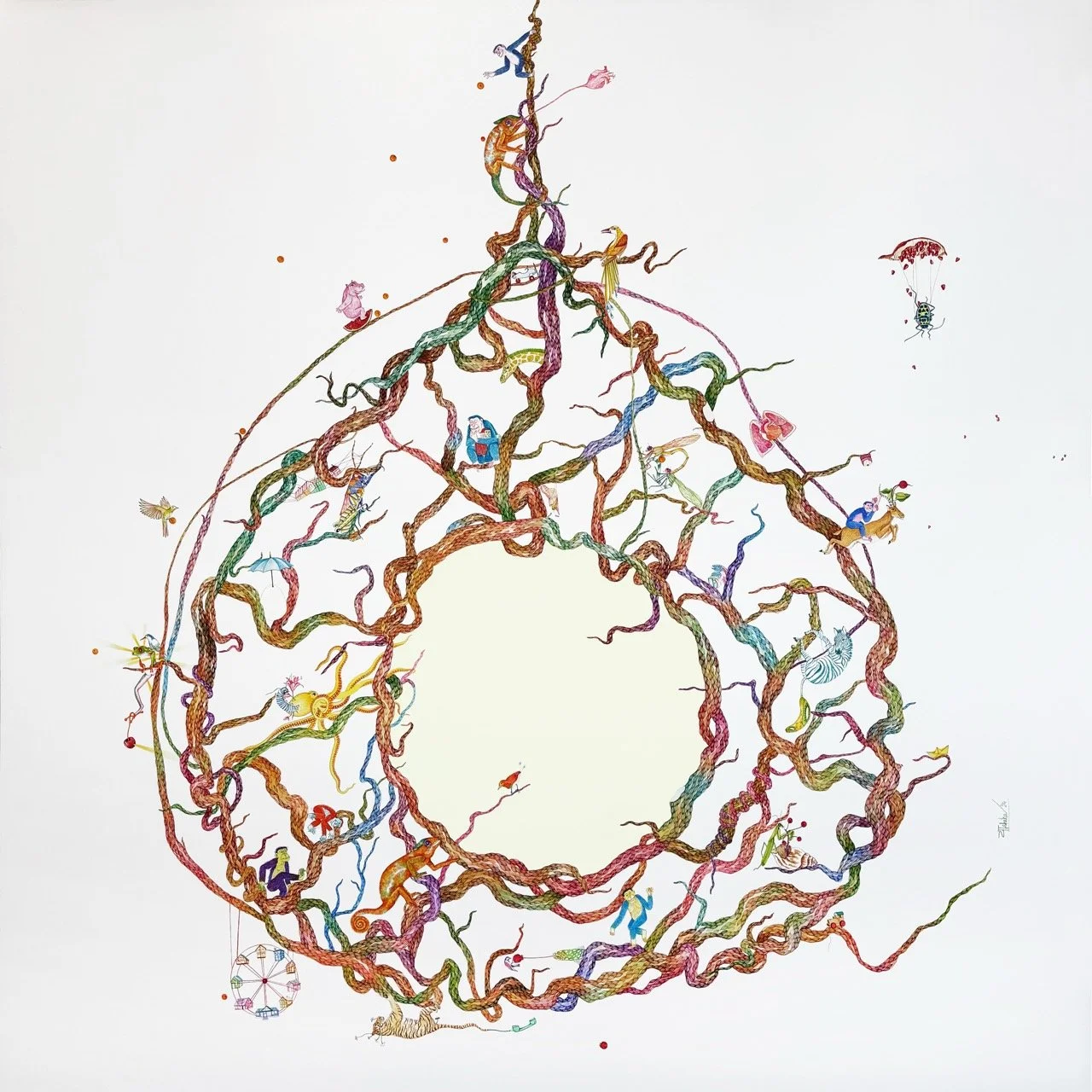
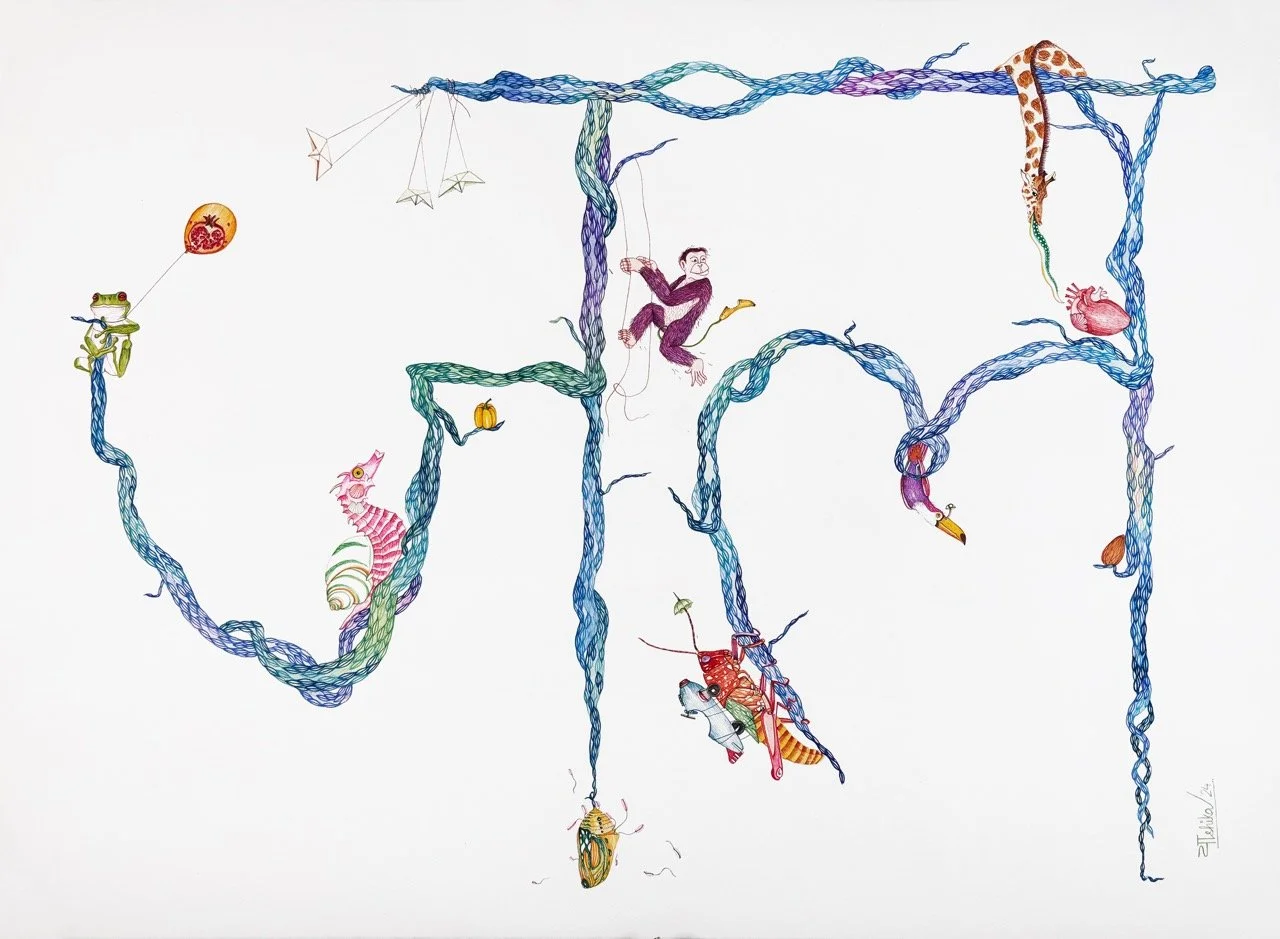
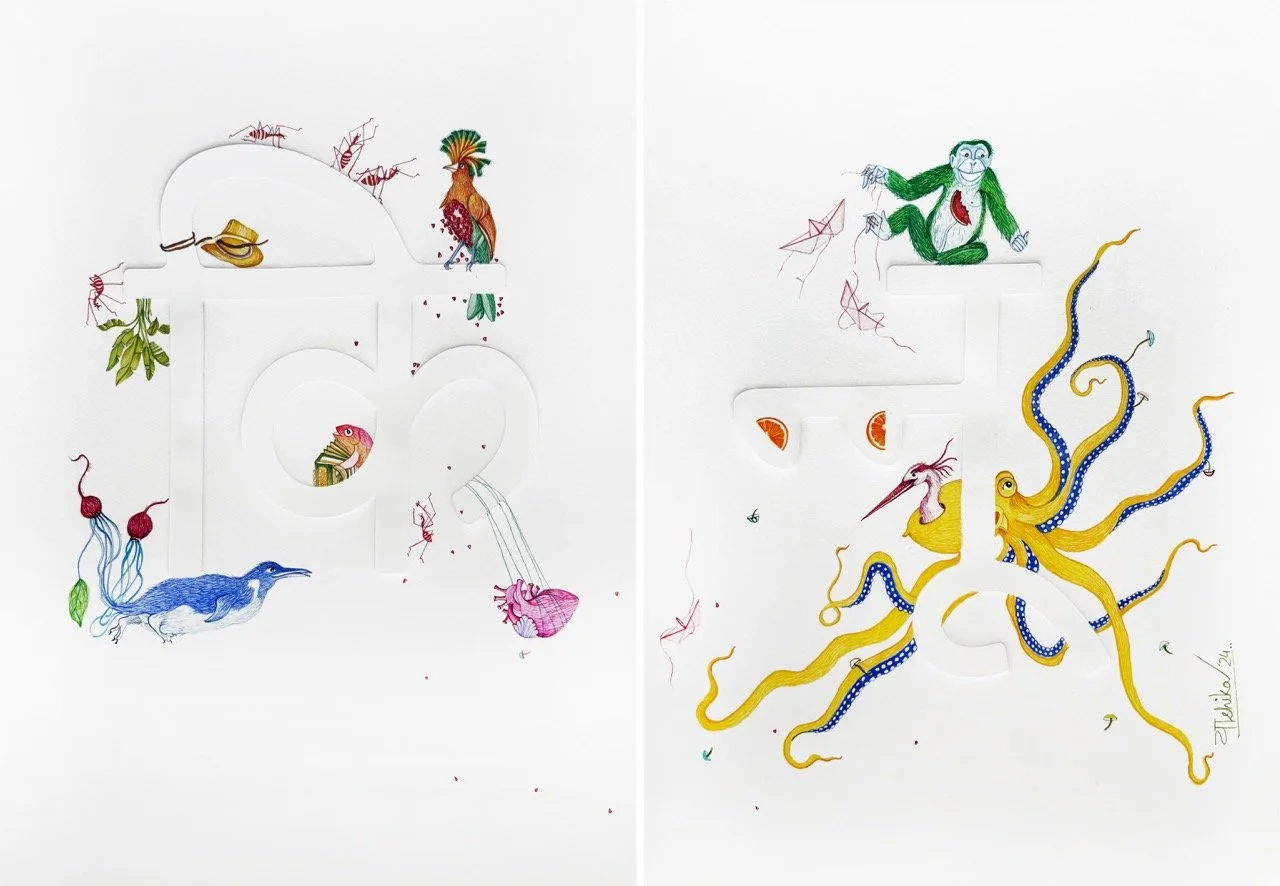
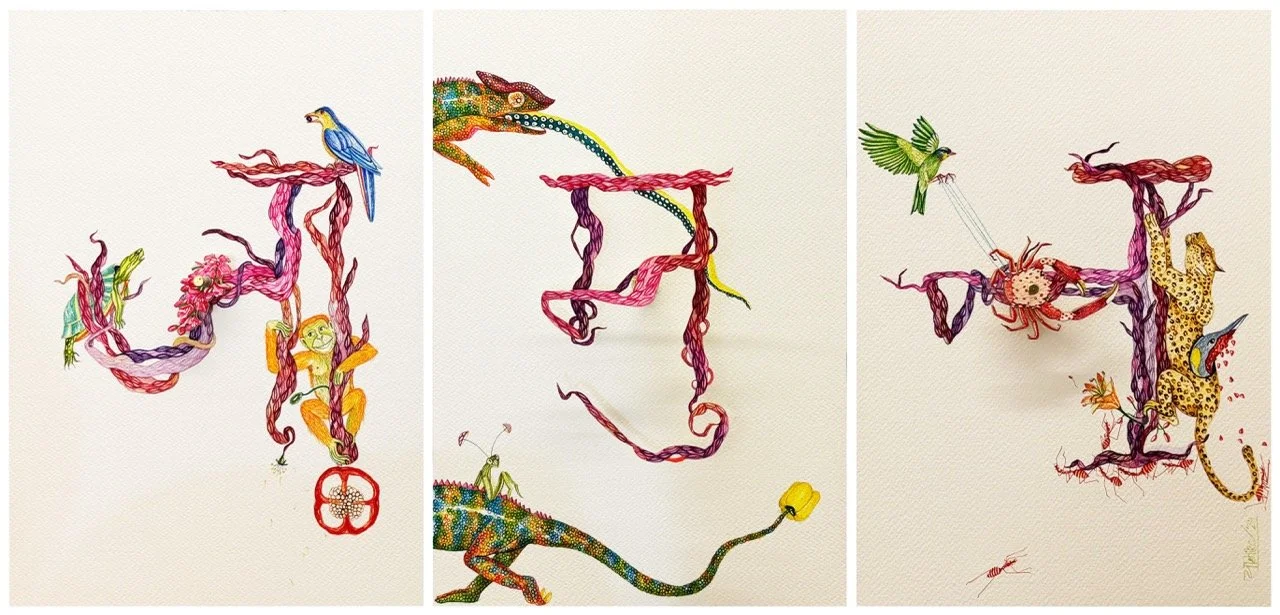
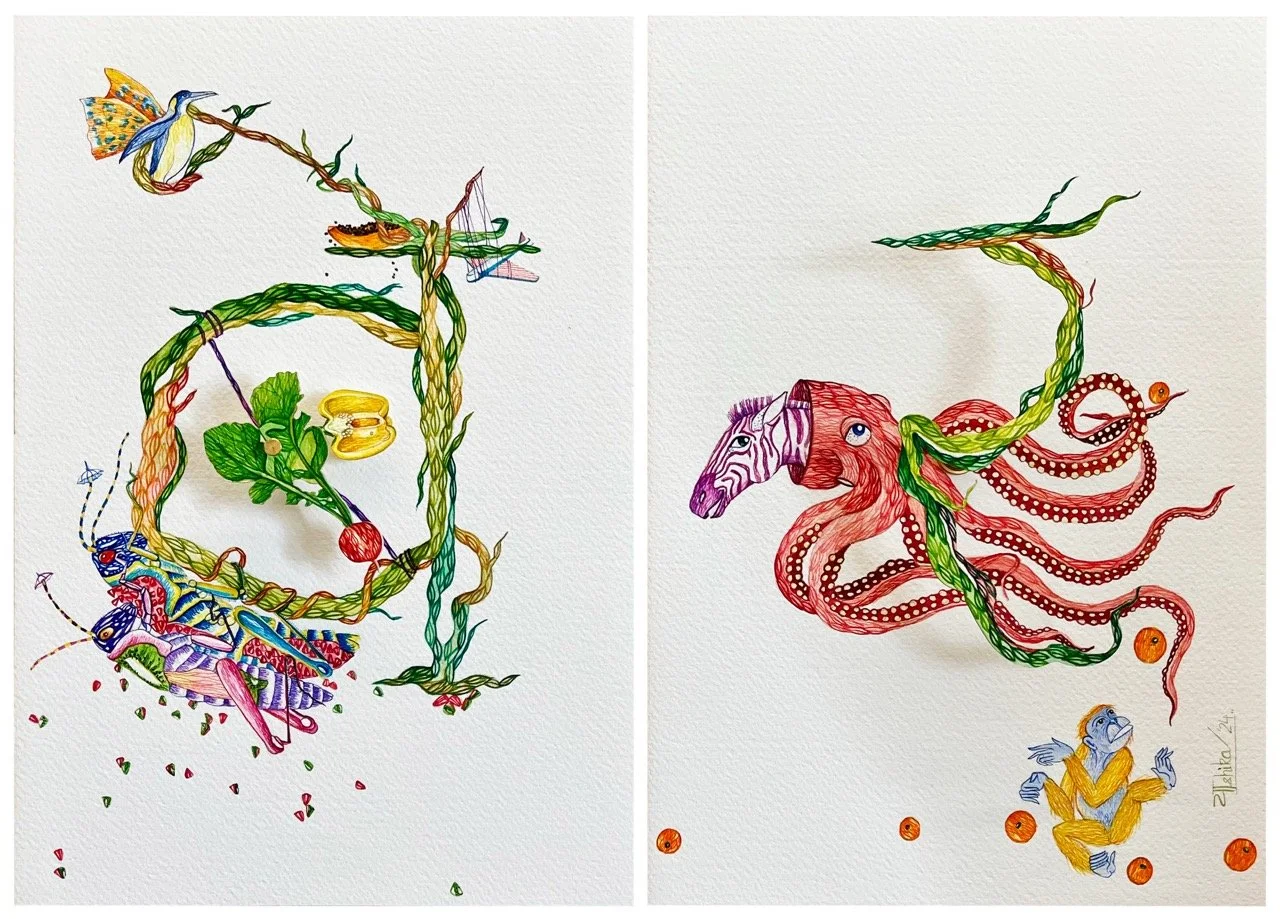
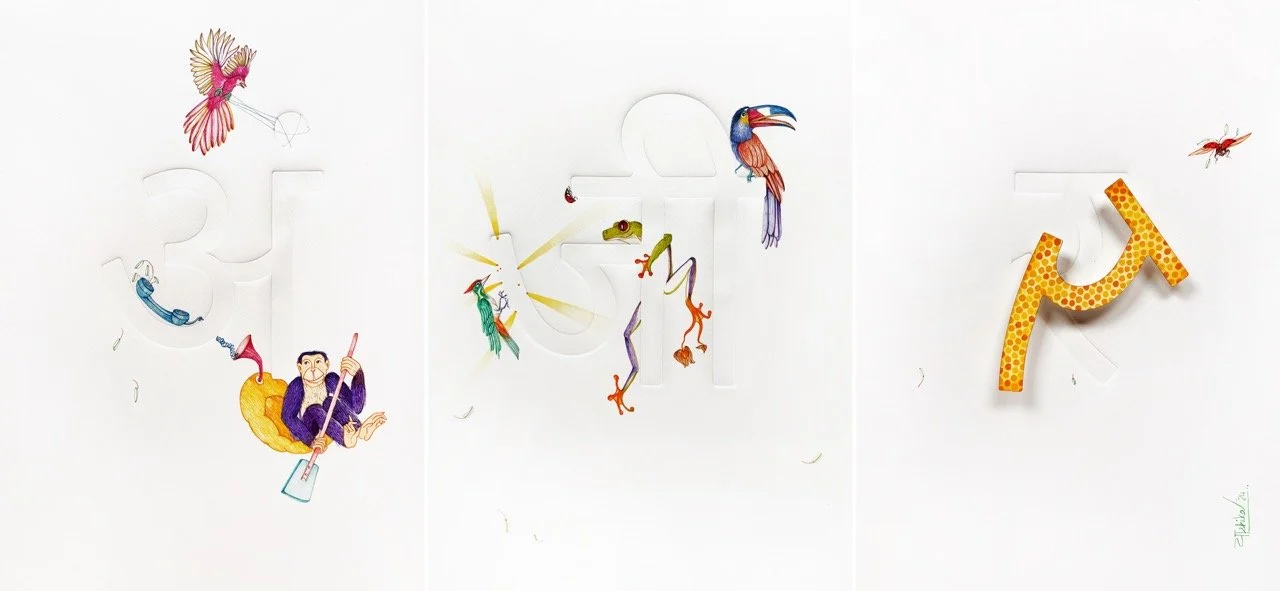
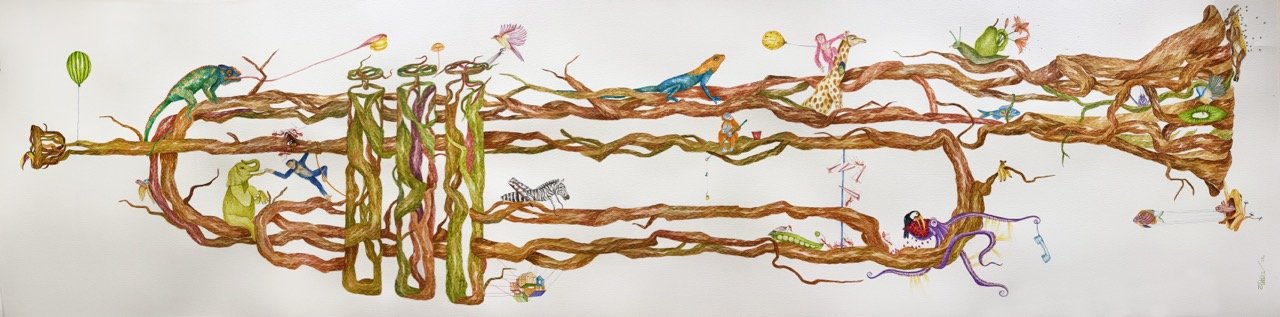
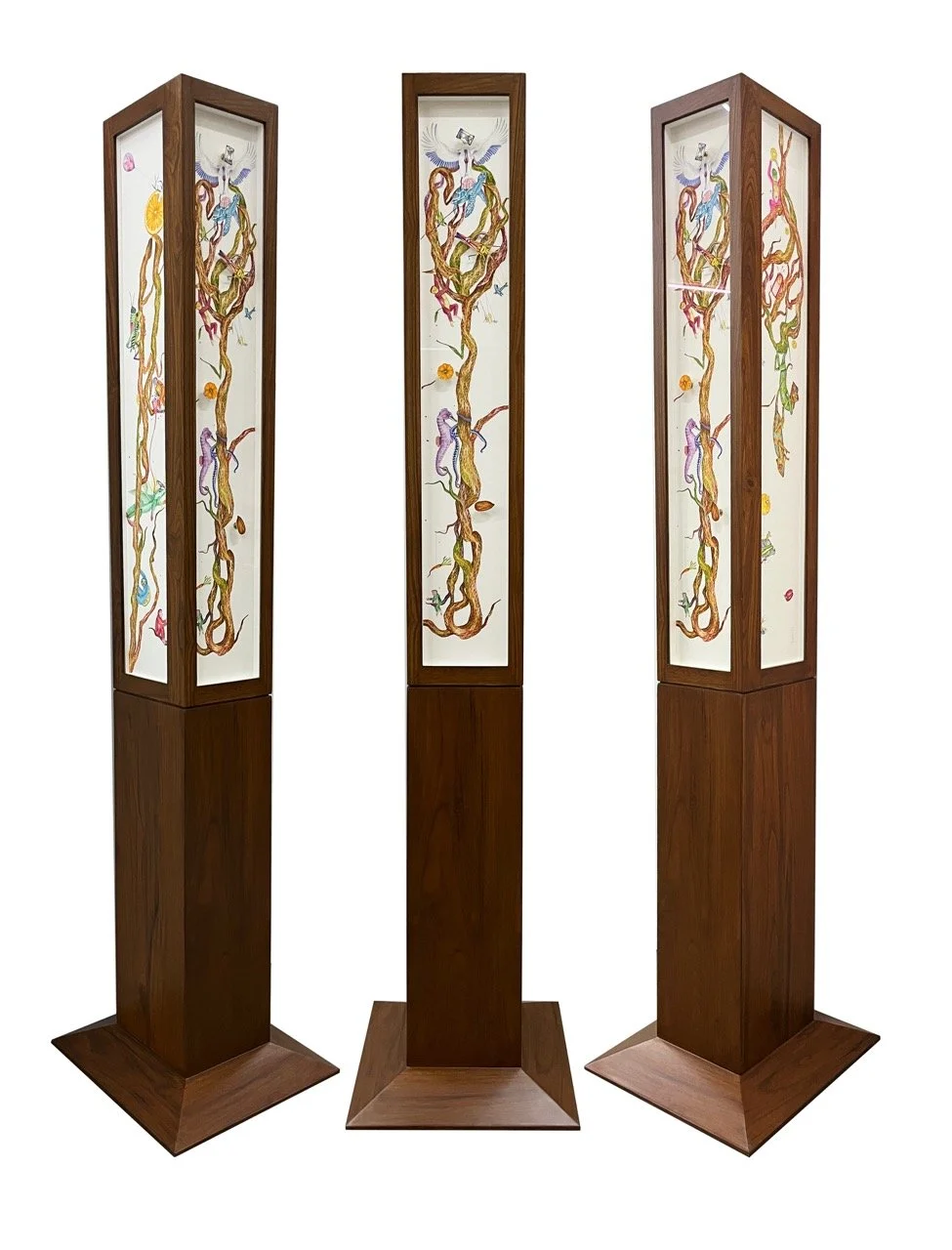
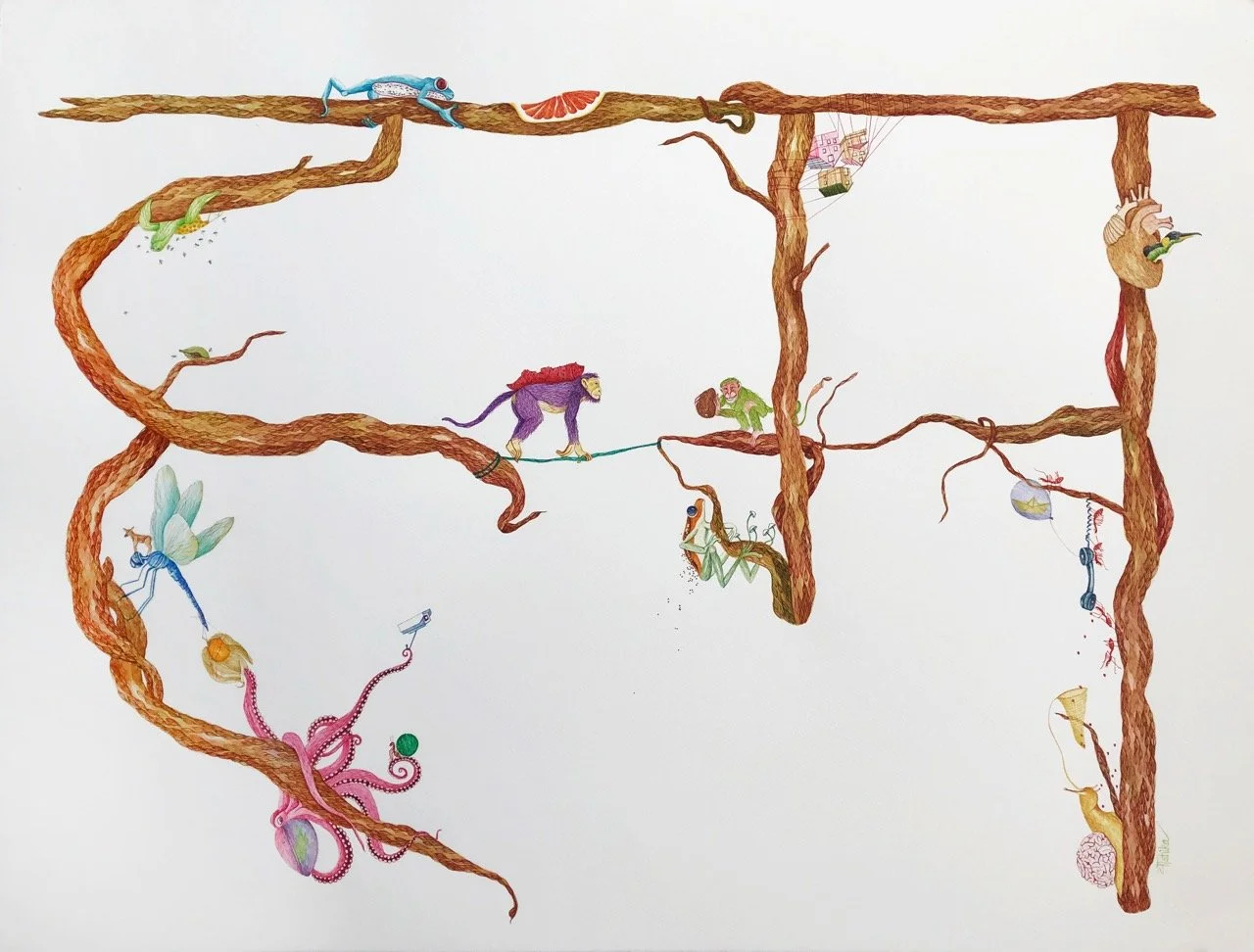
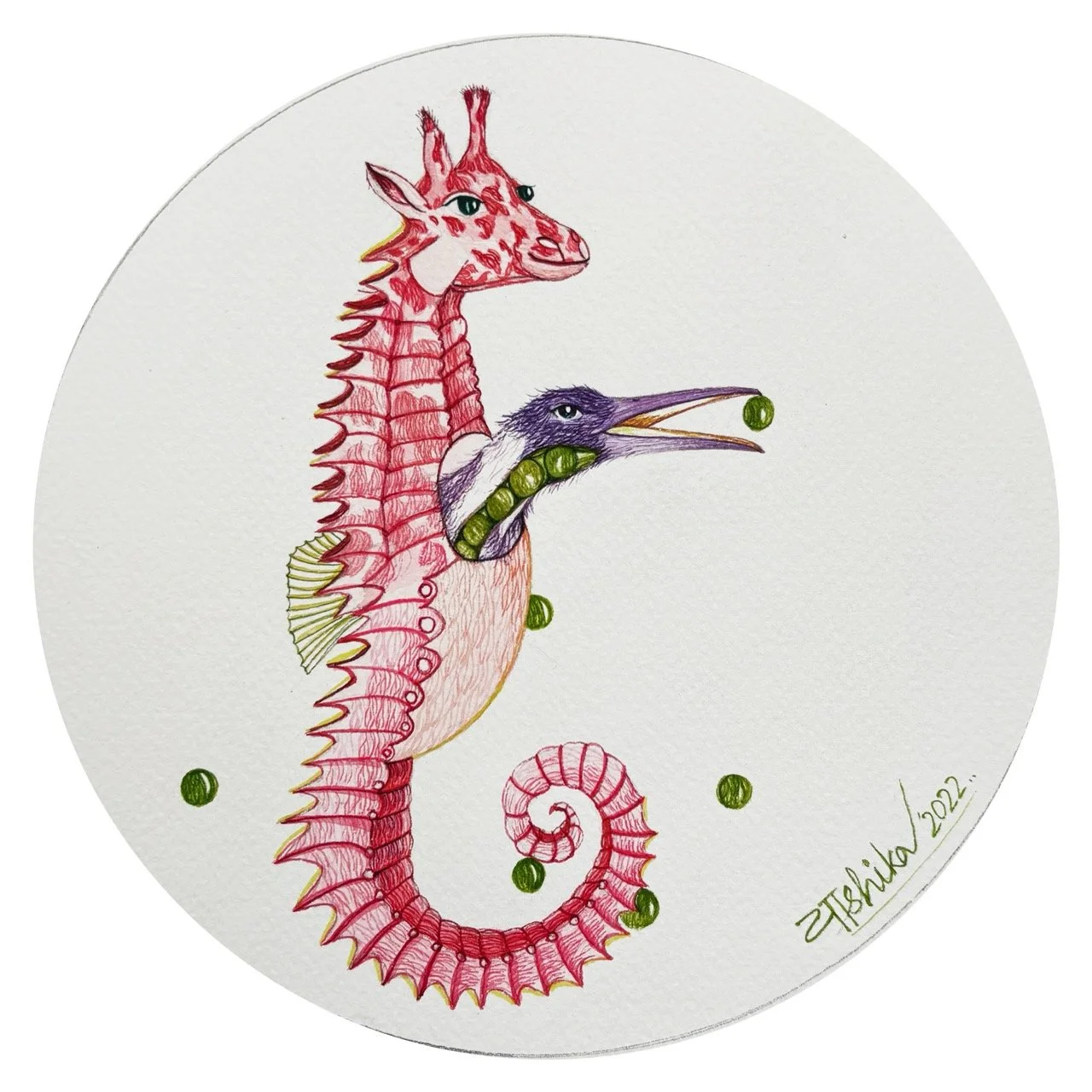
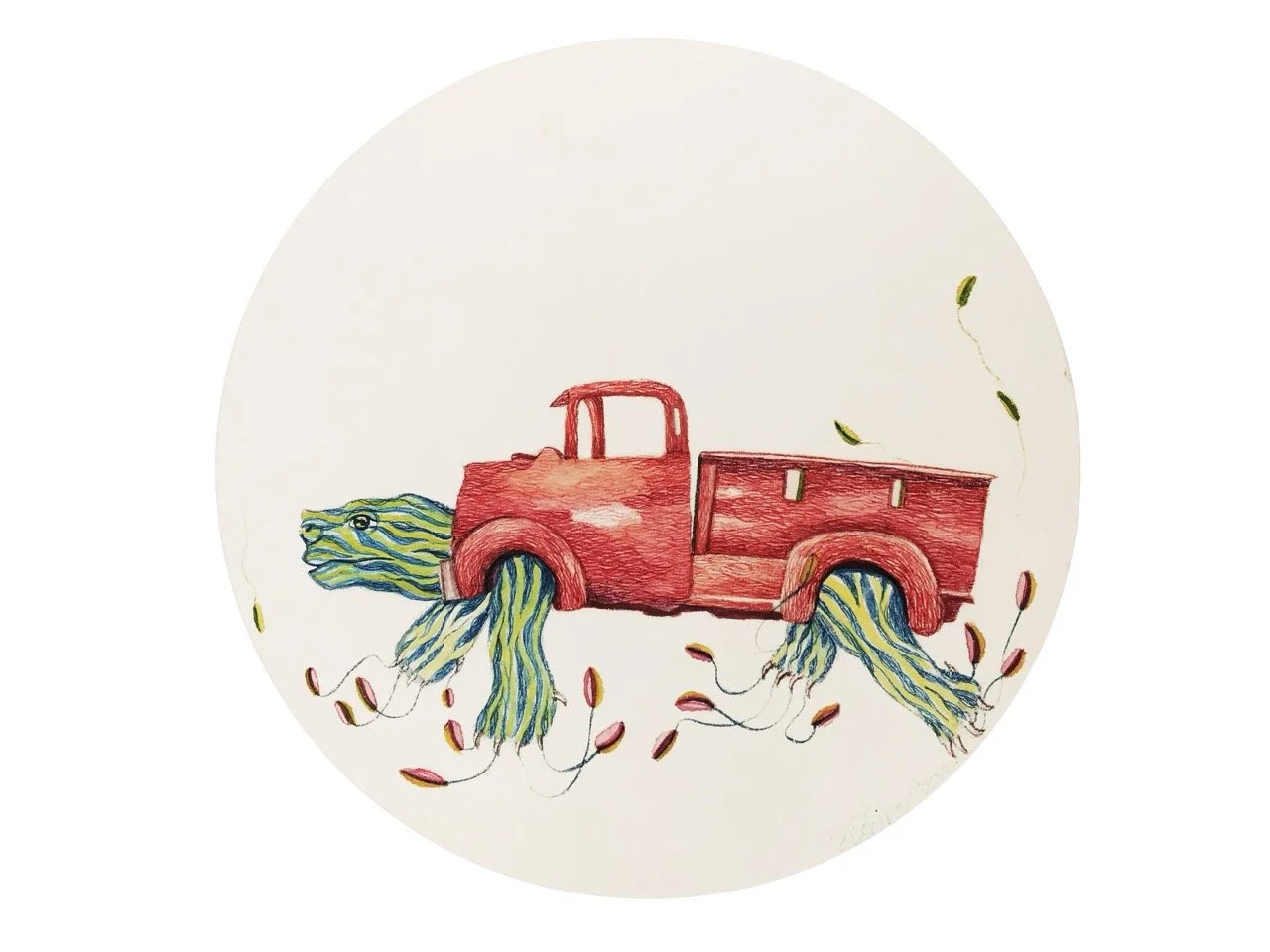
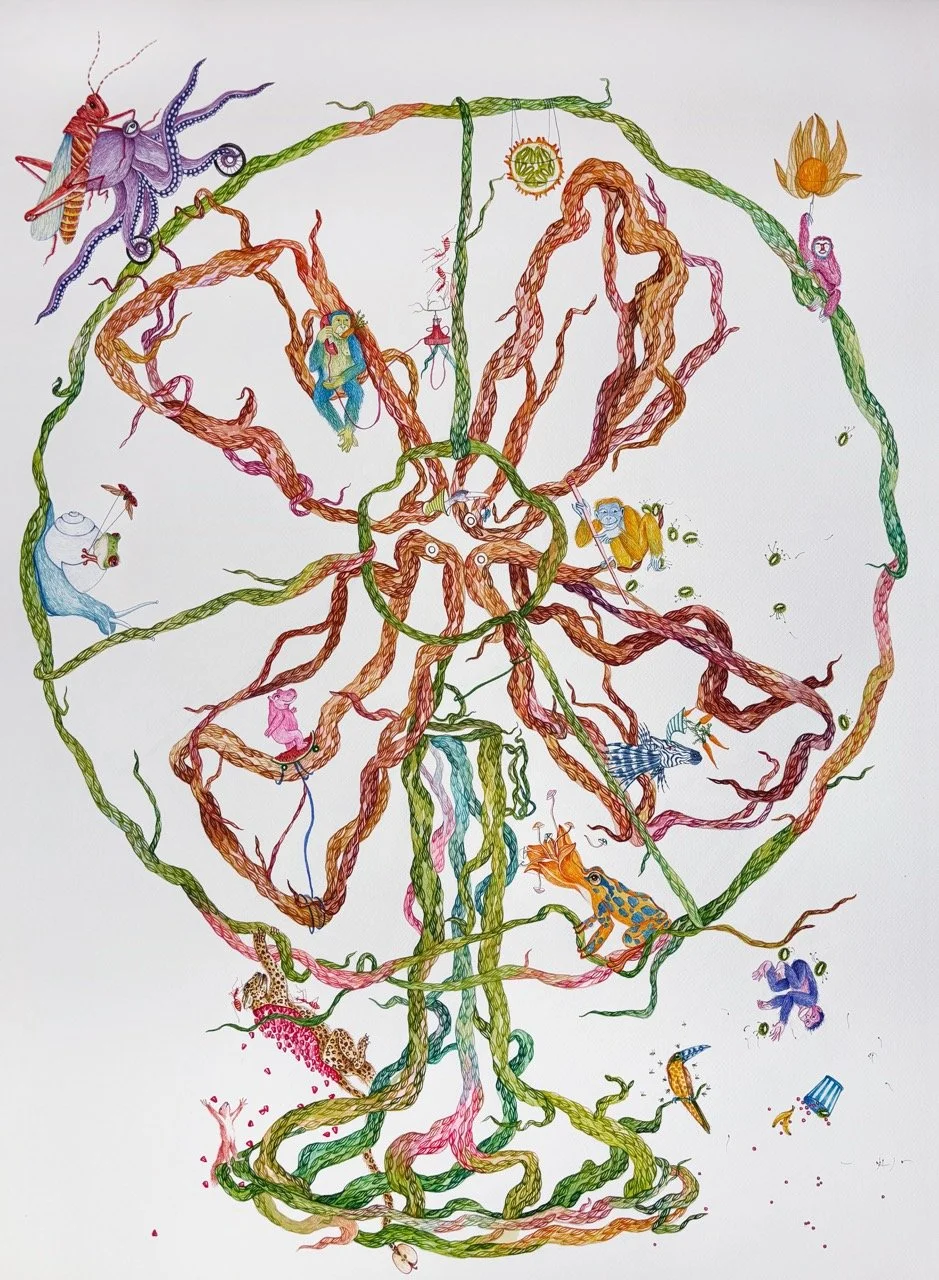
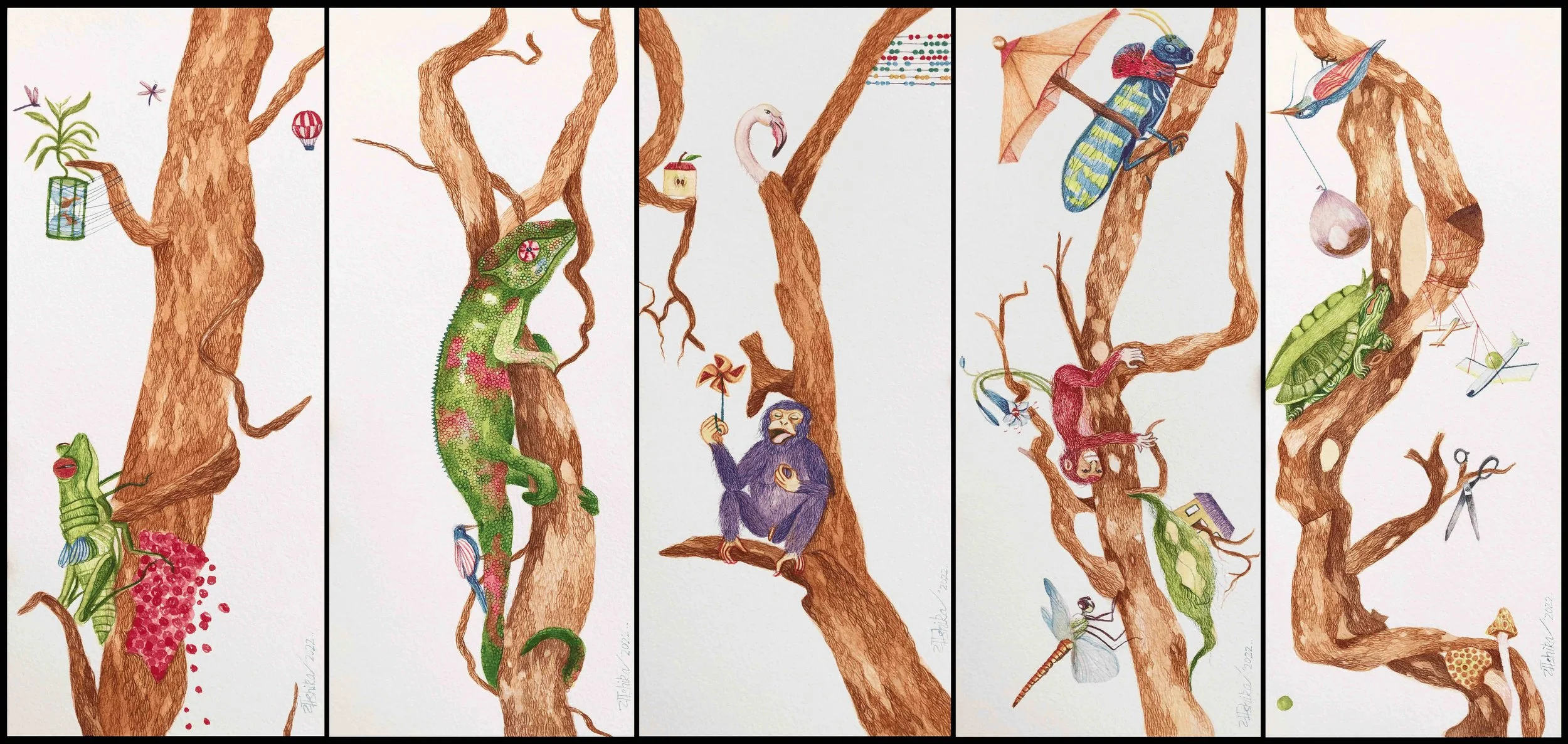
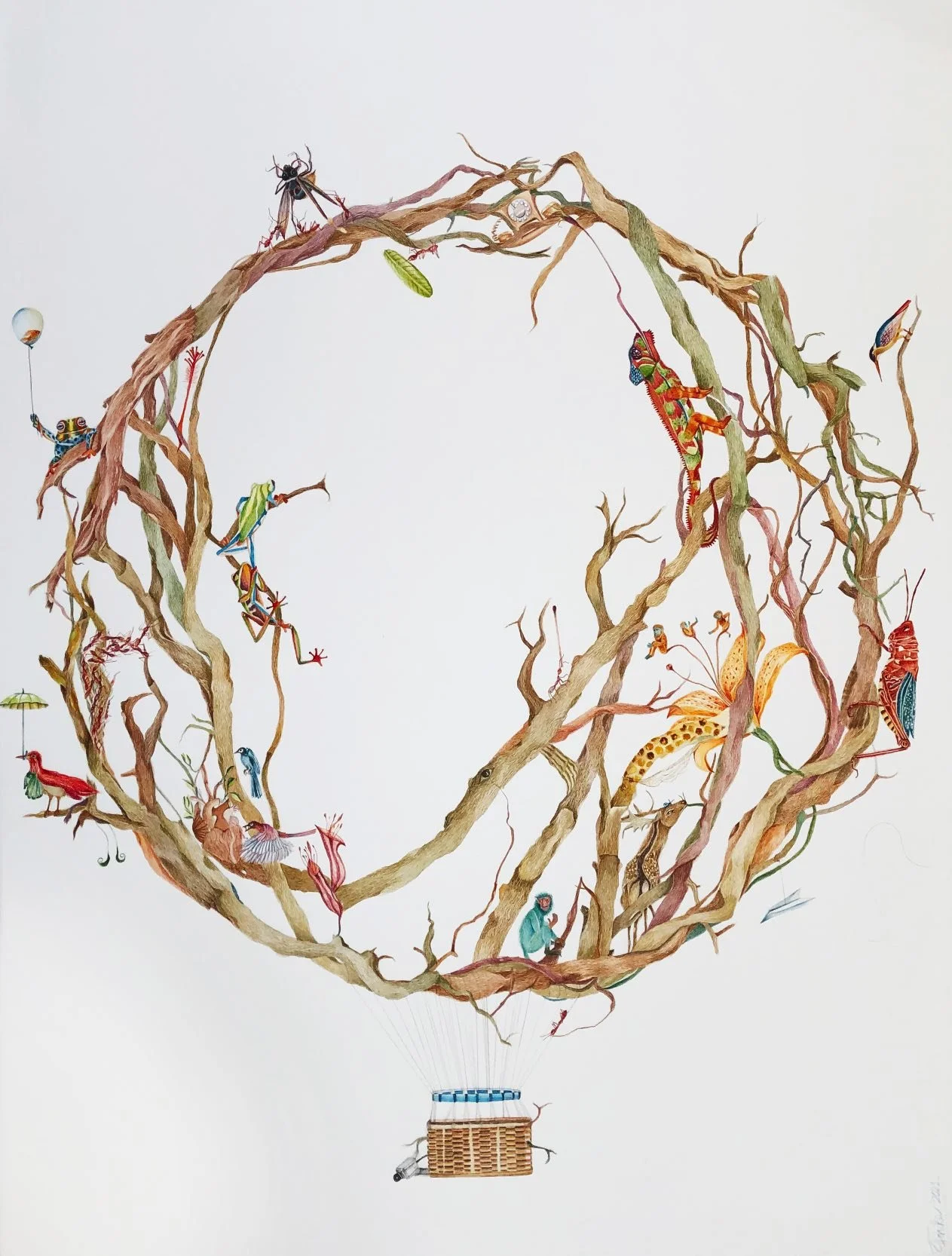
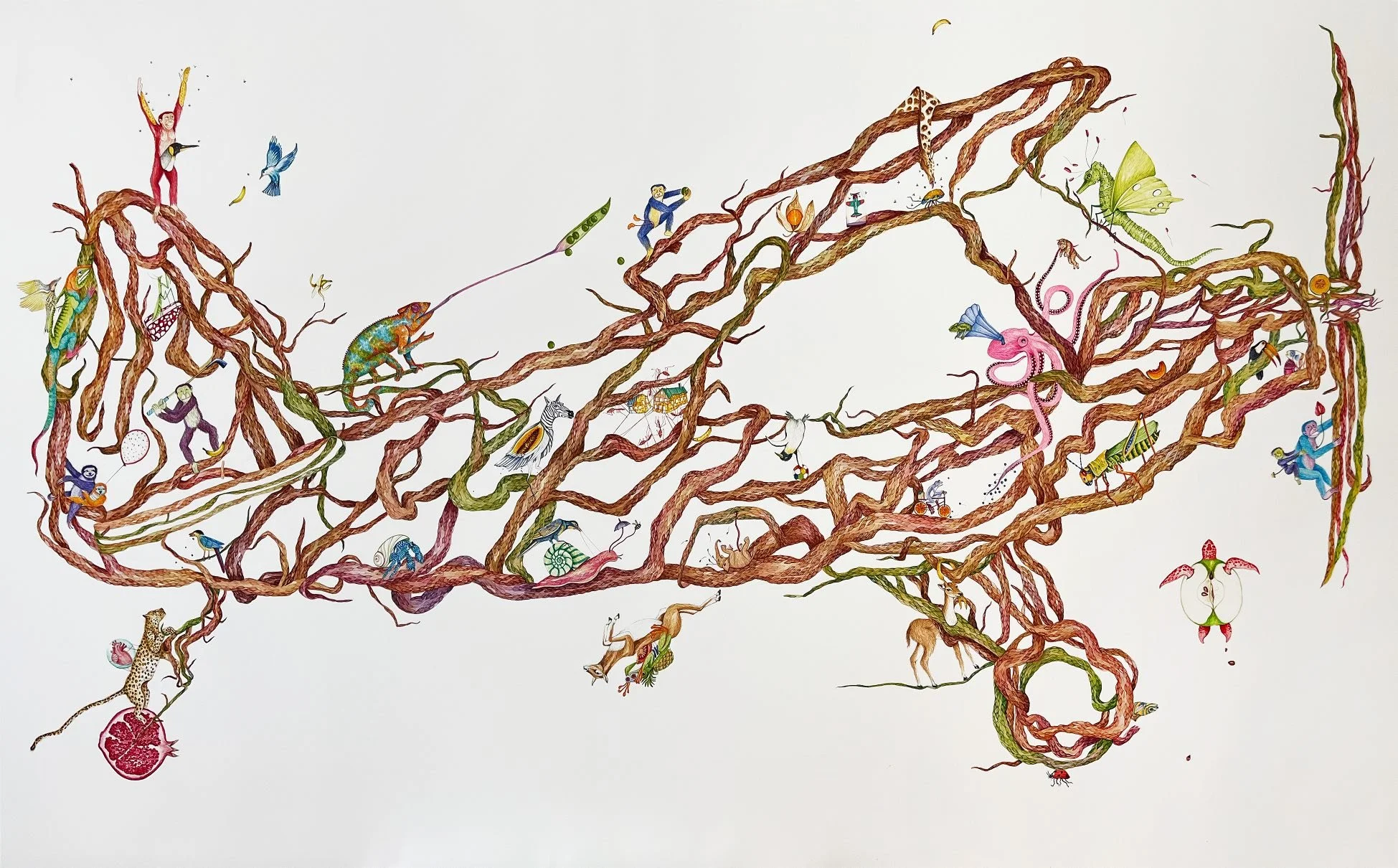
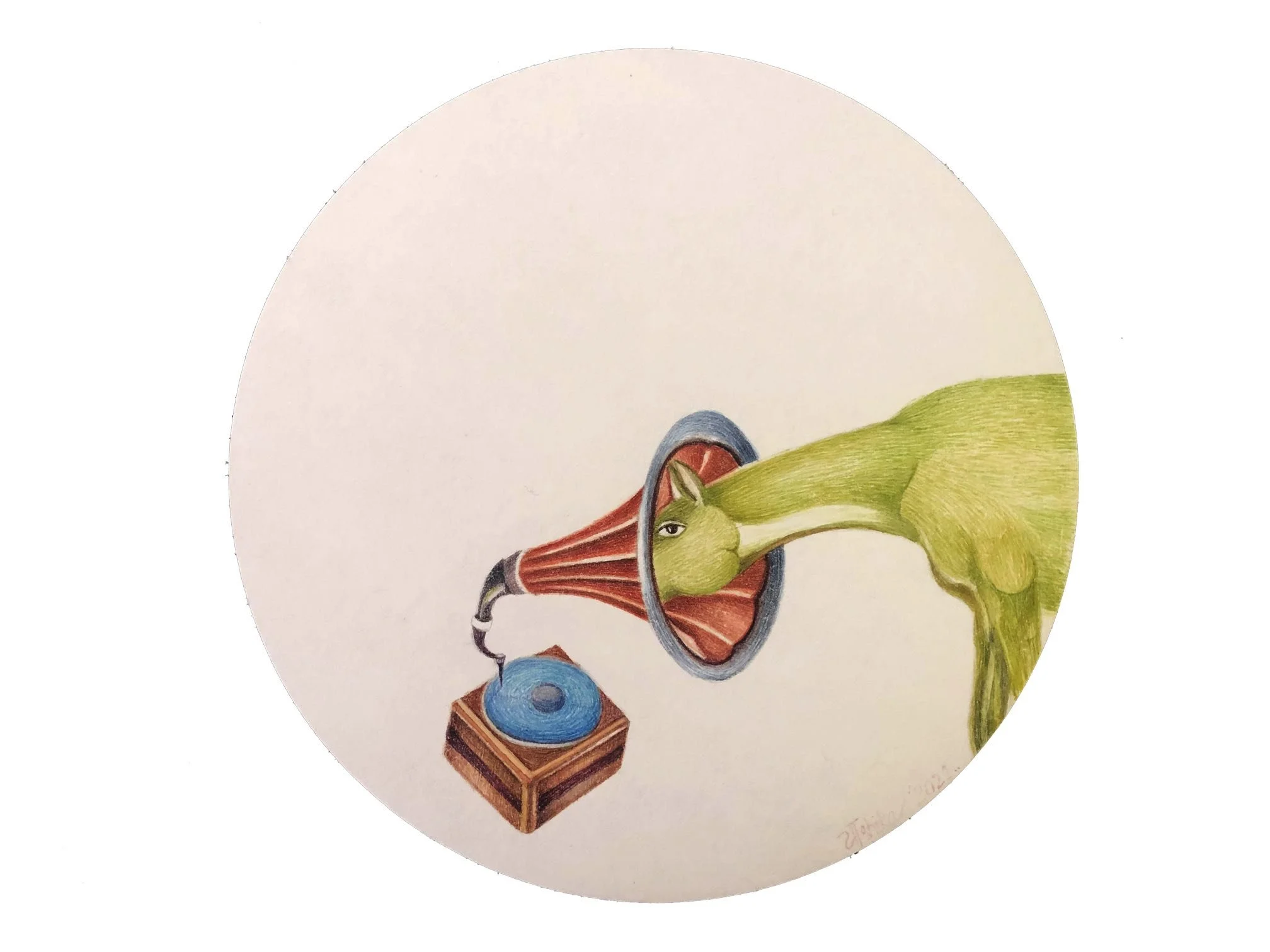
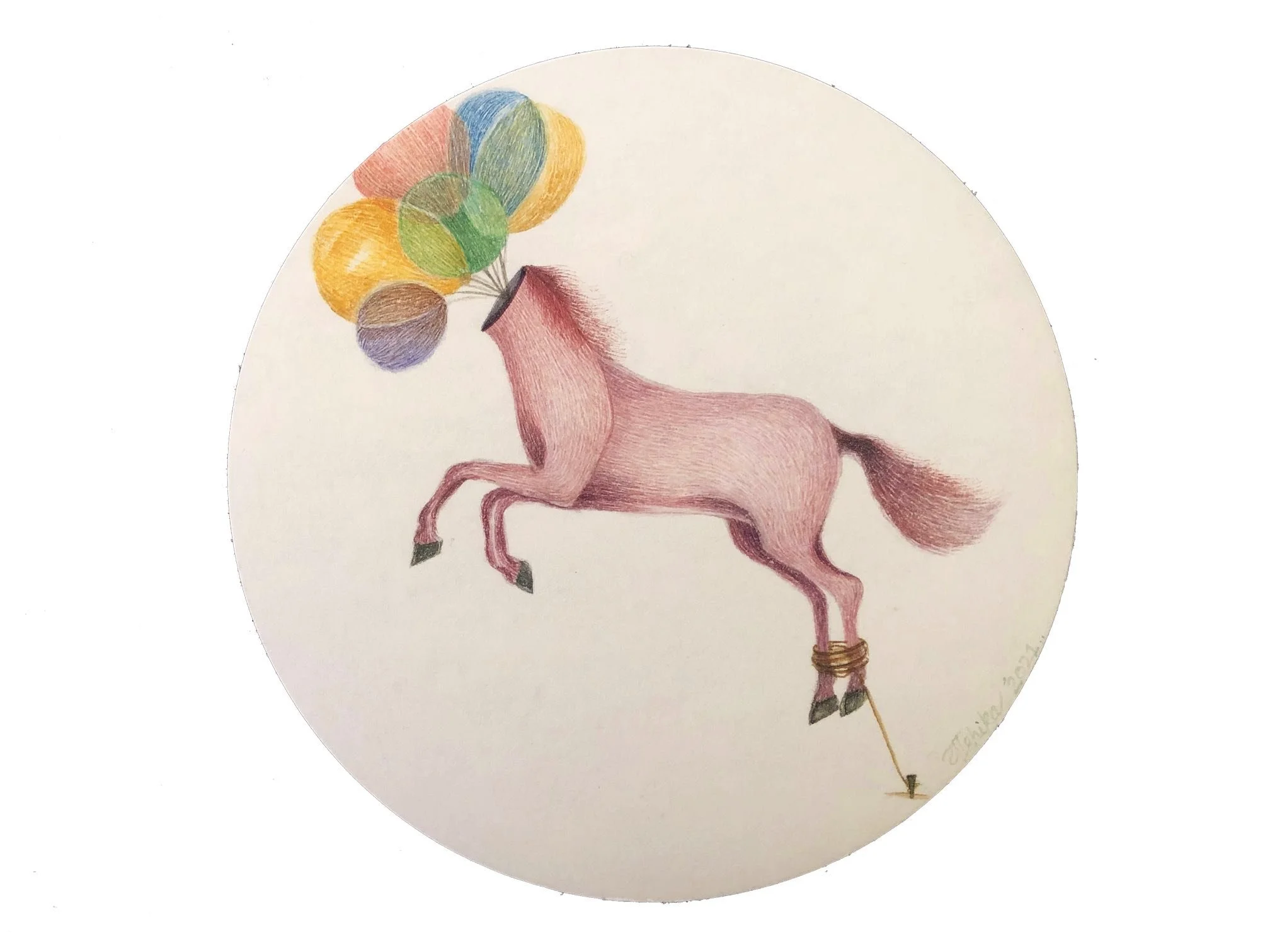
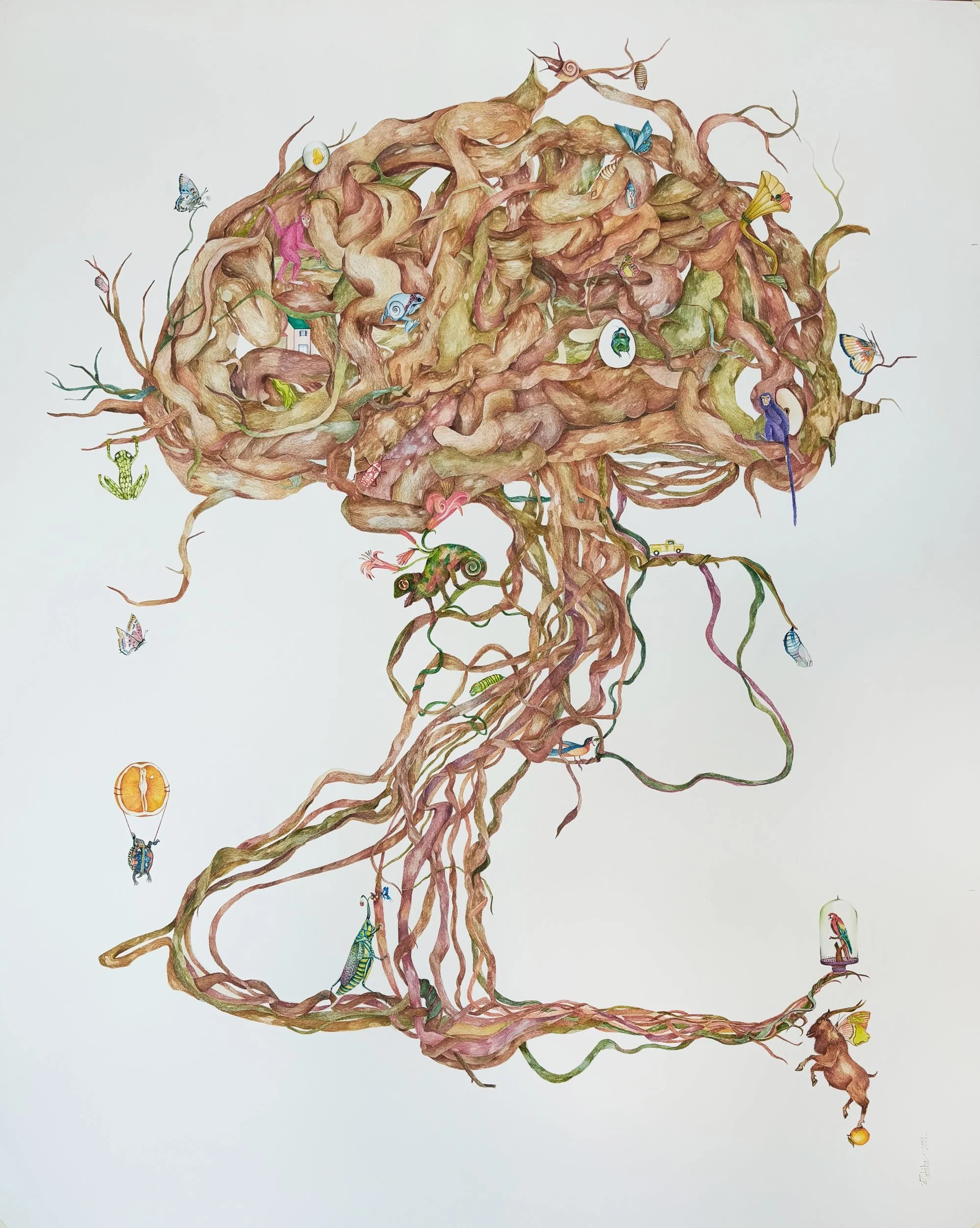
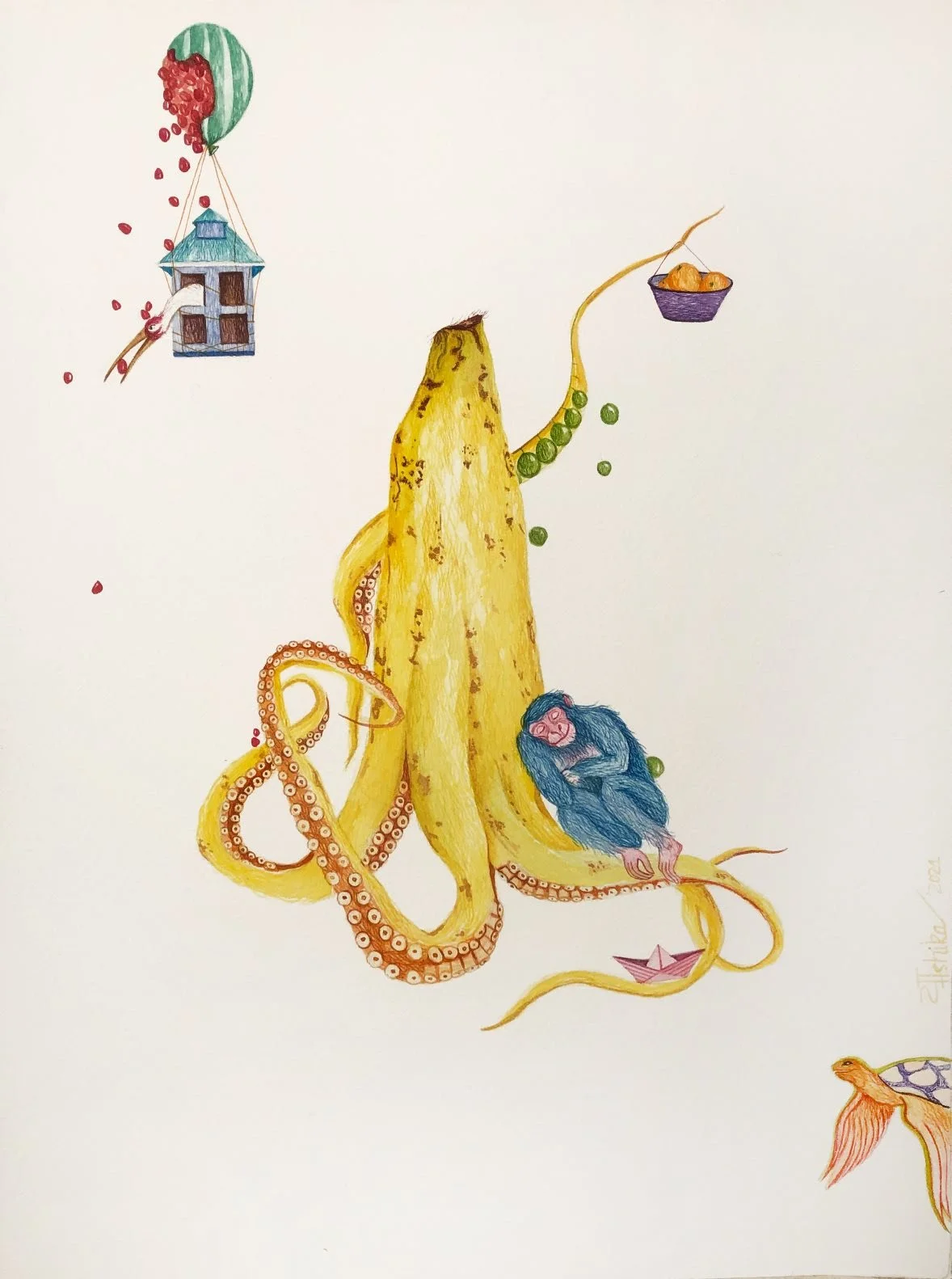
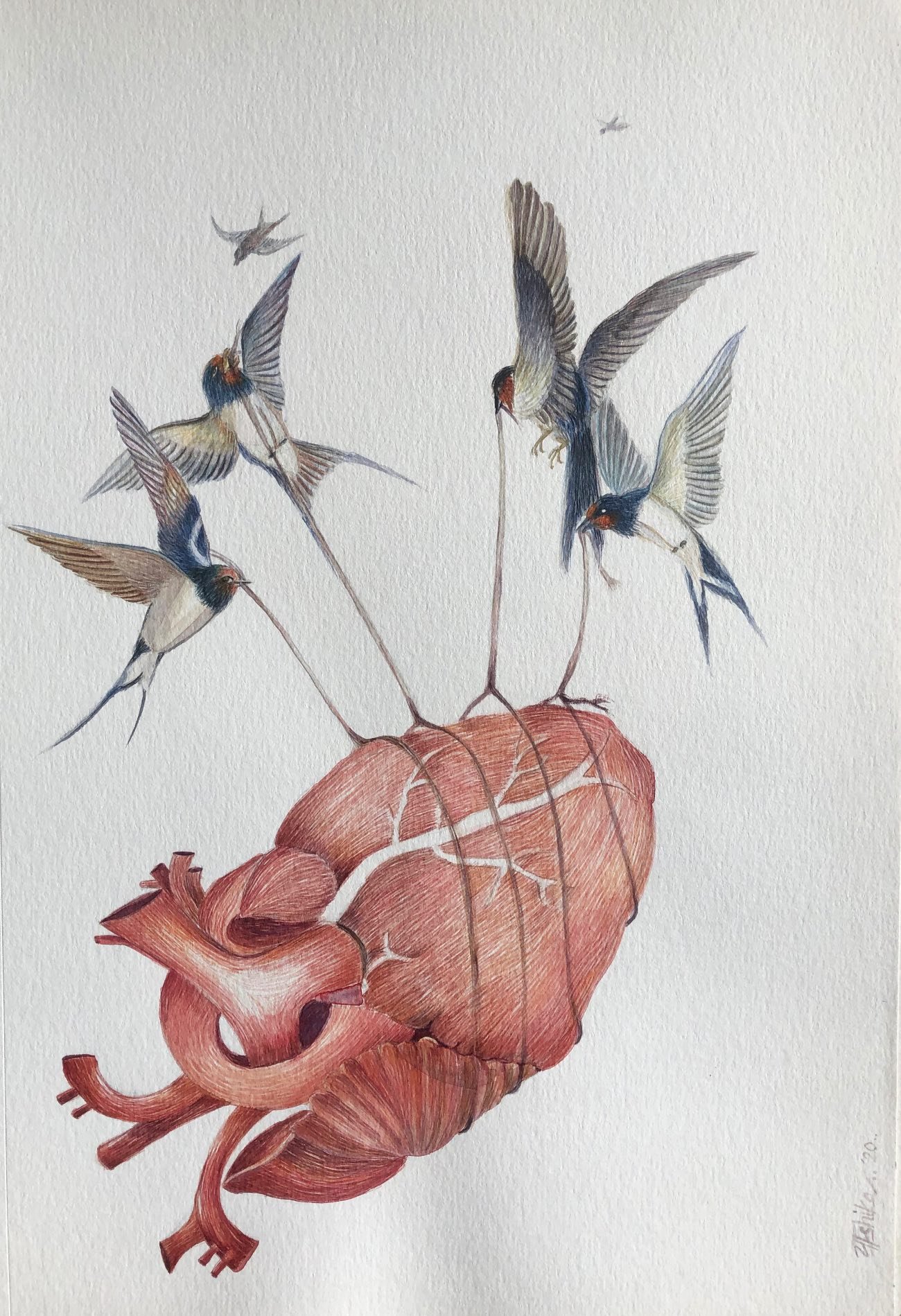
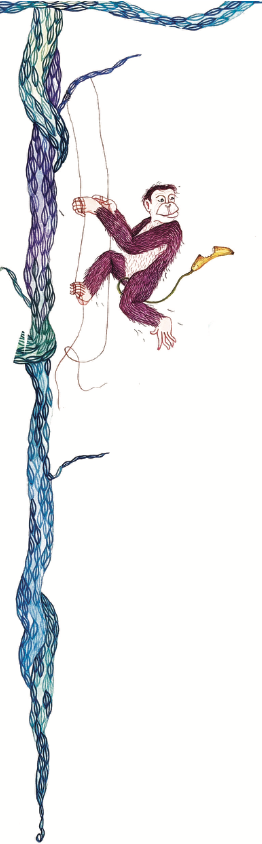
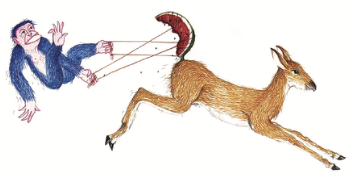
Yashika Sugandh builds delicate, slow universes where animals stretch, fumble, and bloom in ways they were never meant to. A turtle becomes a tomato. A giraffe sprouts from a snail’s shell. A monkey bites into a watermelon tail. The anatomical fusions are charming, yes, whimsical, even, but what makes them enduring is the undercurrent of care and curiosity that pulses beneath each delicate, skilled hand-drawn line.
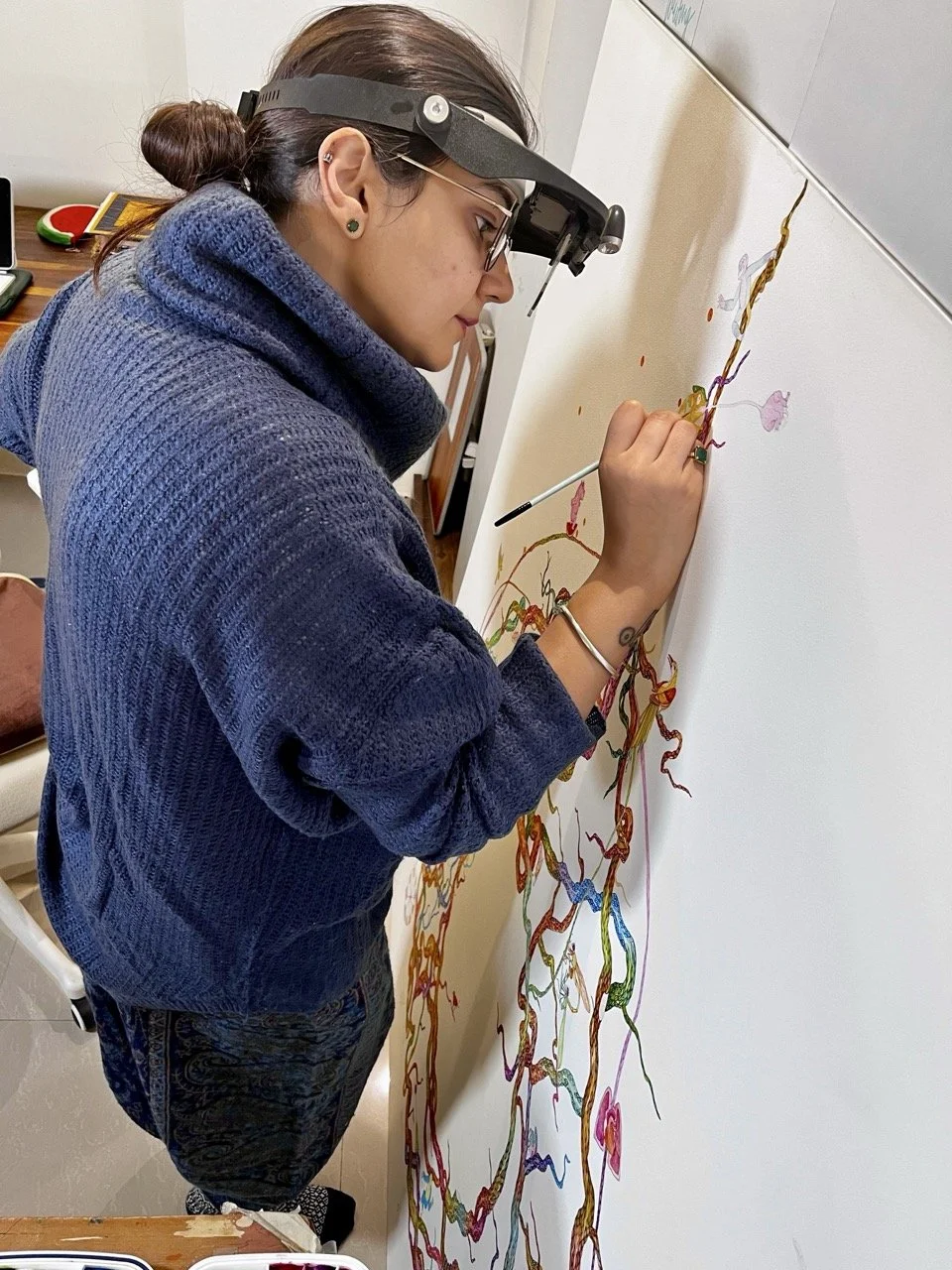
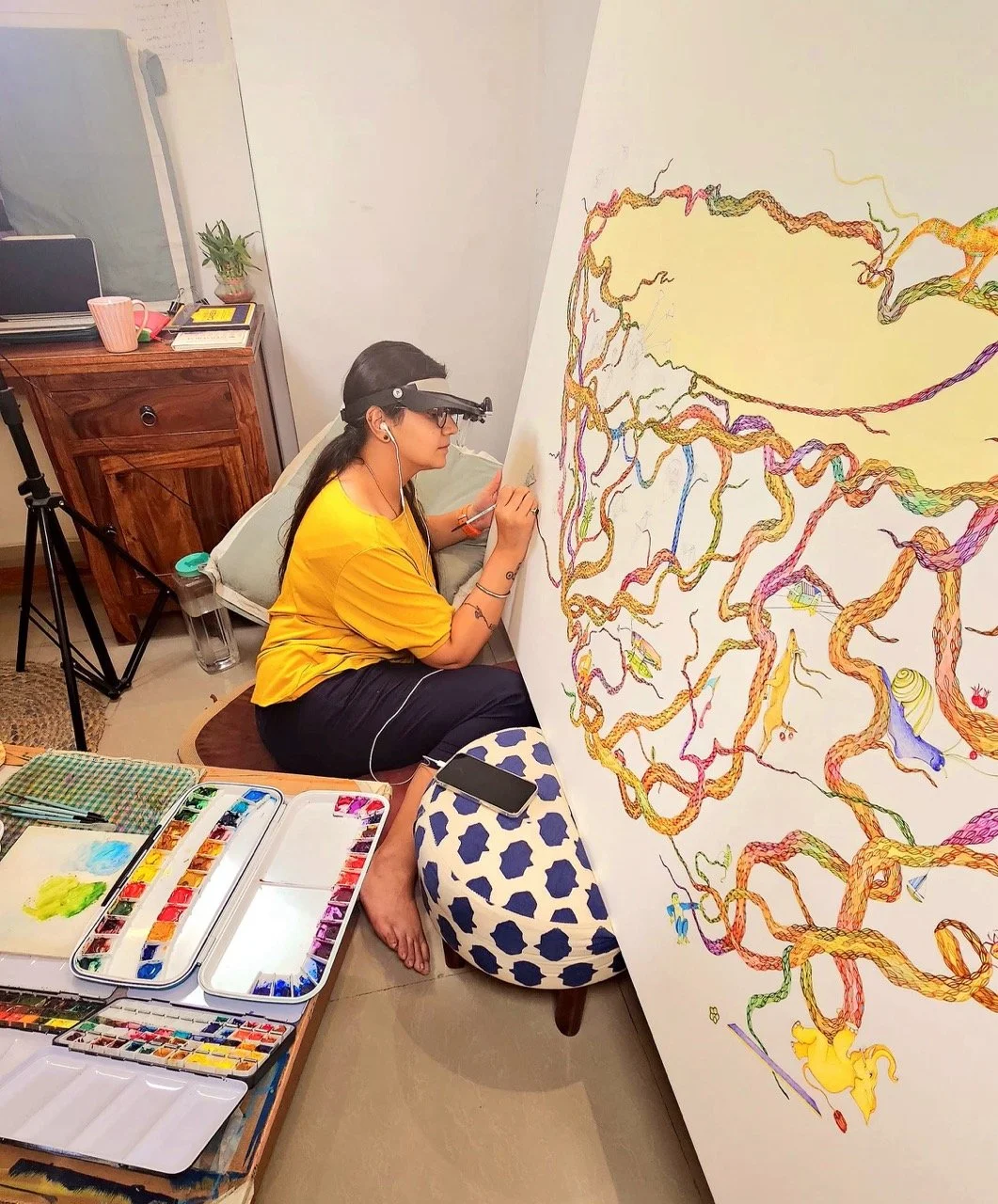
Sugandh’s work is driven not by spectacle but by observation. Not by declarations, but by listening. And the world she listens to is often the world we forget to hear.
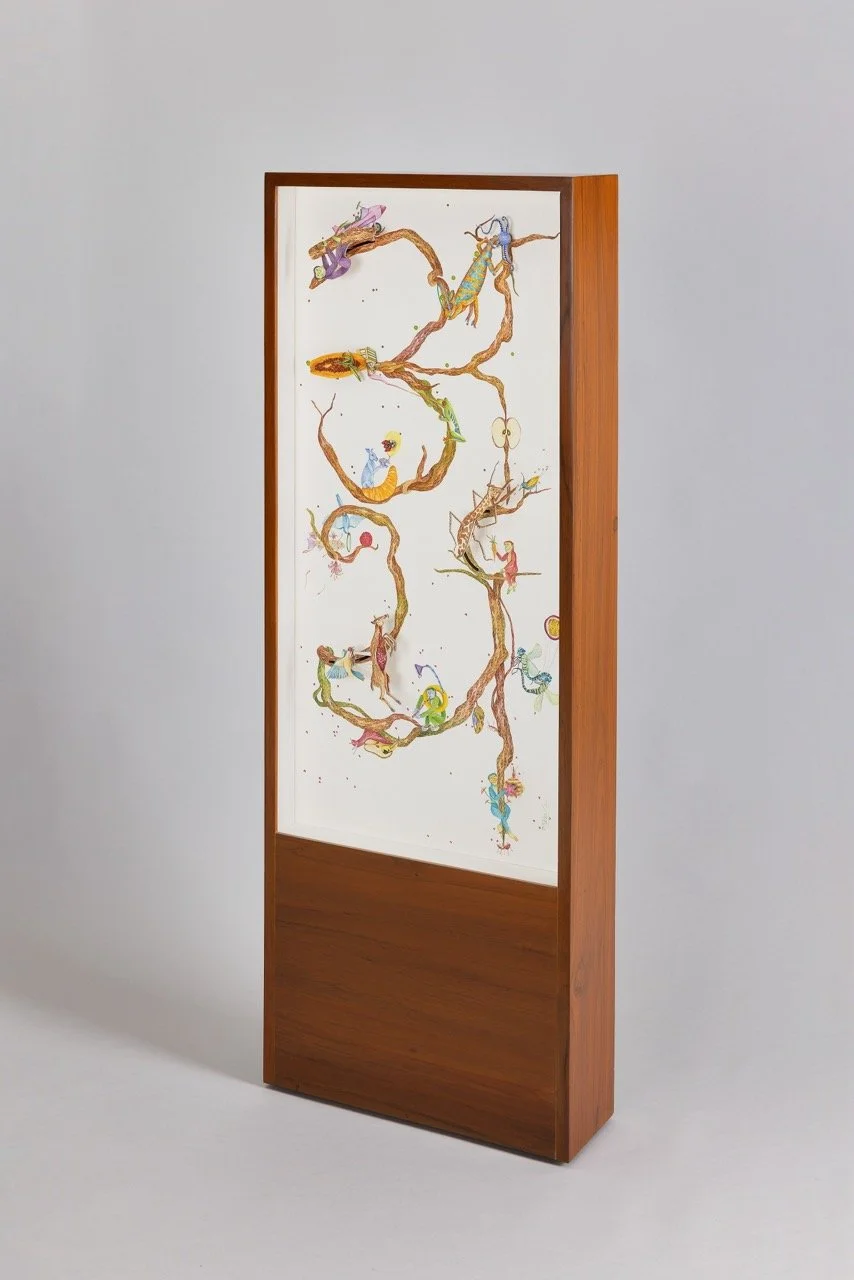
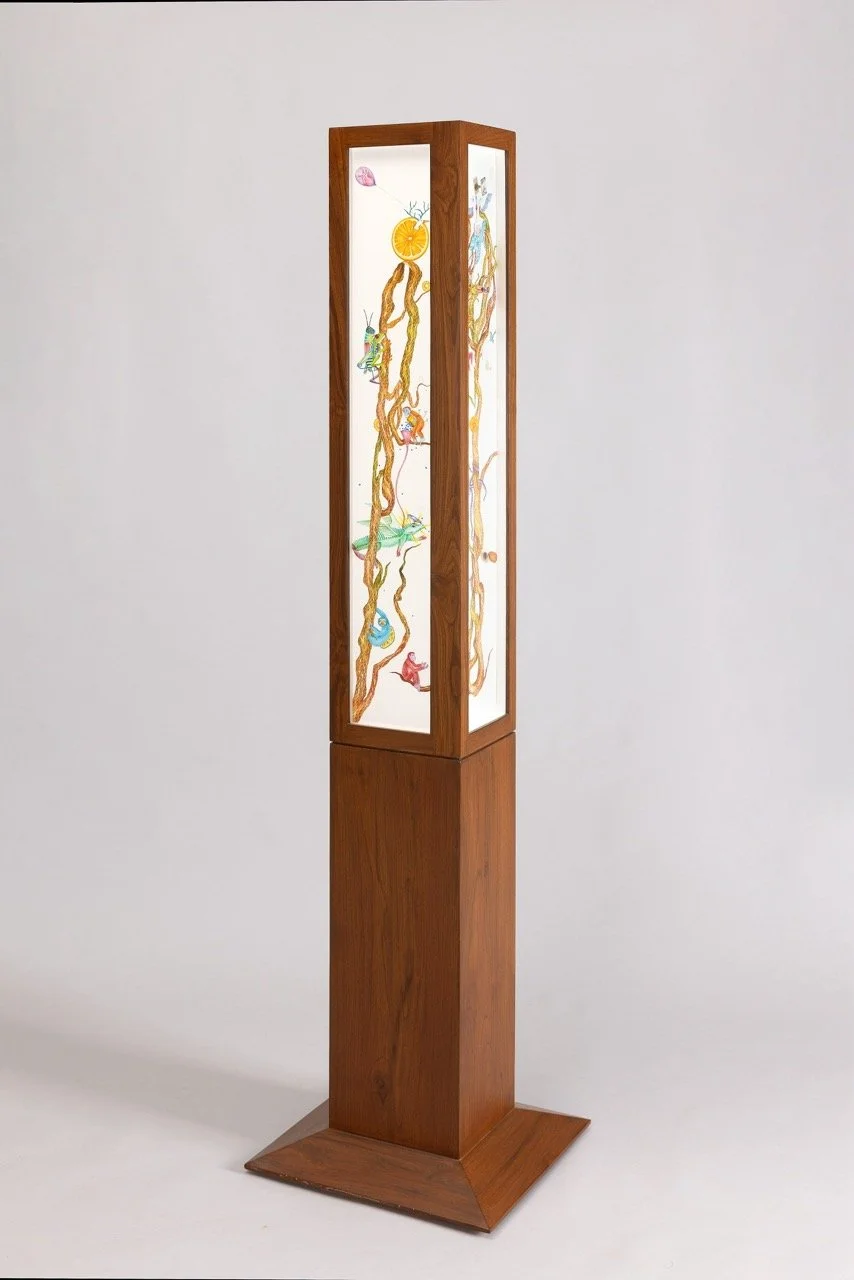
Her protagonists are not humans reclaiming nature - they are animals, spirits, and hybrid beings reclaiming space, time, and dignity. Her world is not utopian, but attentive. It reminds us that seeing is a form of touch. To experience an artwork by Yashika Sugandh is to invite tenderness into your everyday. It is to be reminded that growth is possible even on old machines, that chairs remember the trees they came from, that animals might yet grow fruit, that even the smallest creatures are building homes, that even drawings can hold breath and a clock can turn prayer. In a world that often demands speed, and asks us to look away, her work invites us to notice, to slow down, to soften, to stay a little longer, not out of resistance, but out of reverence.
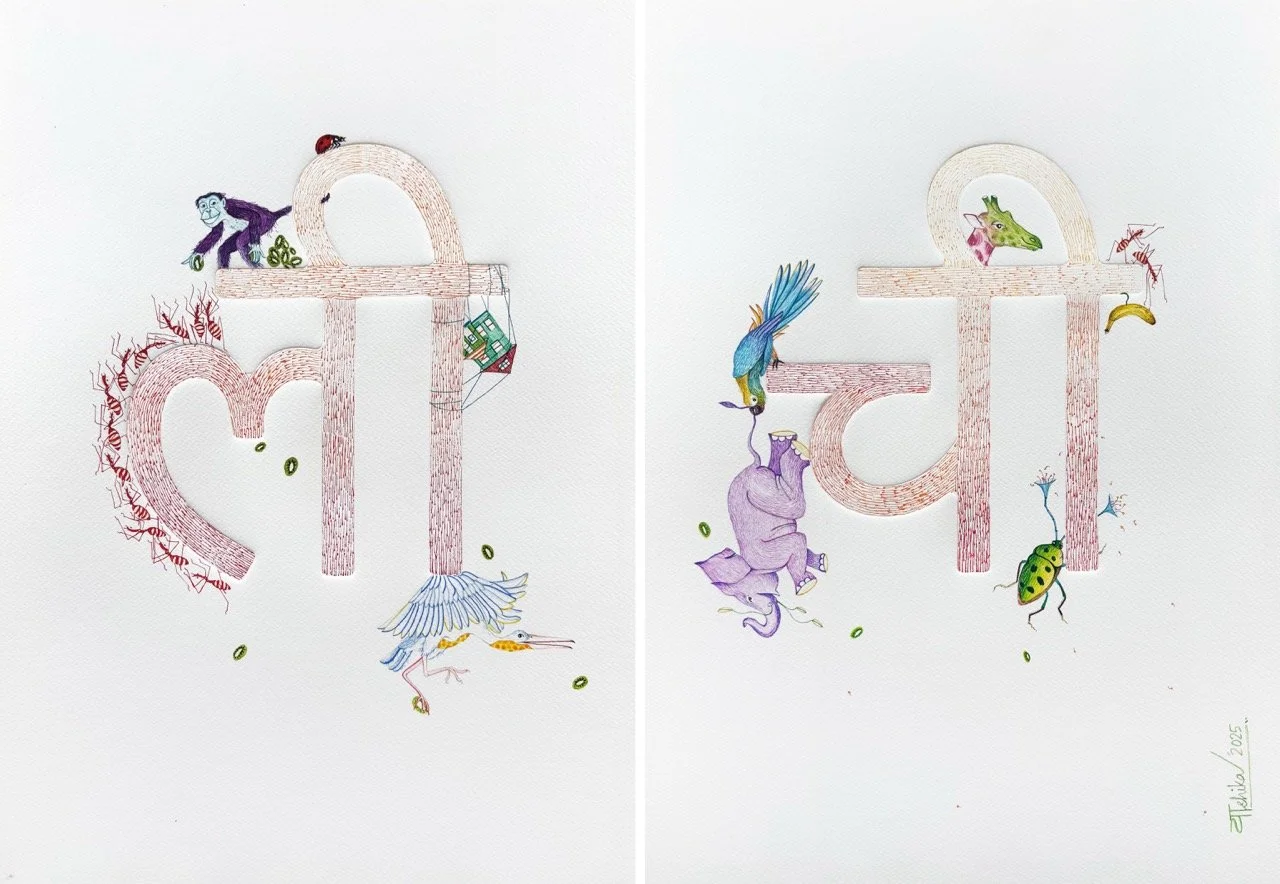
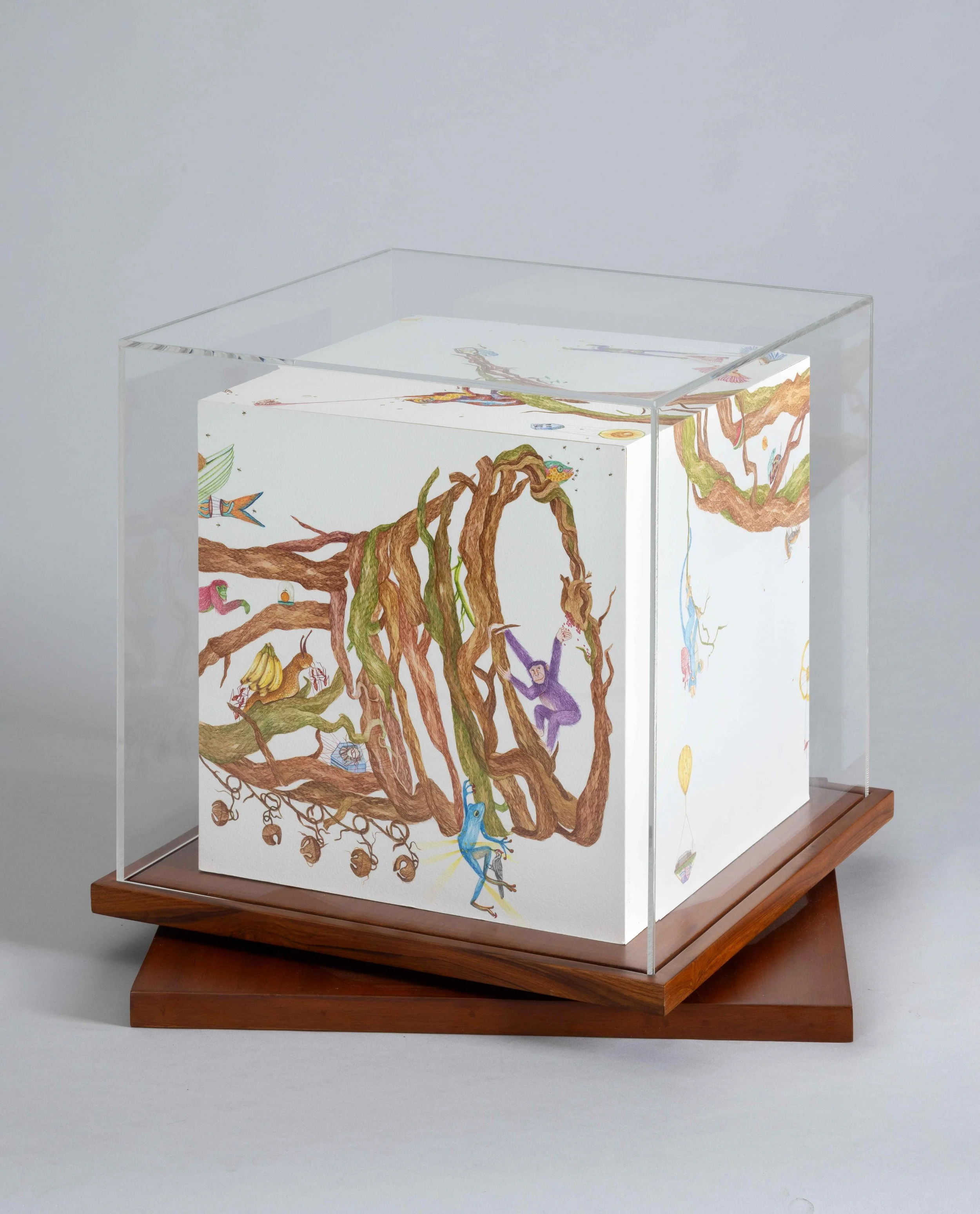
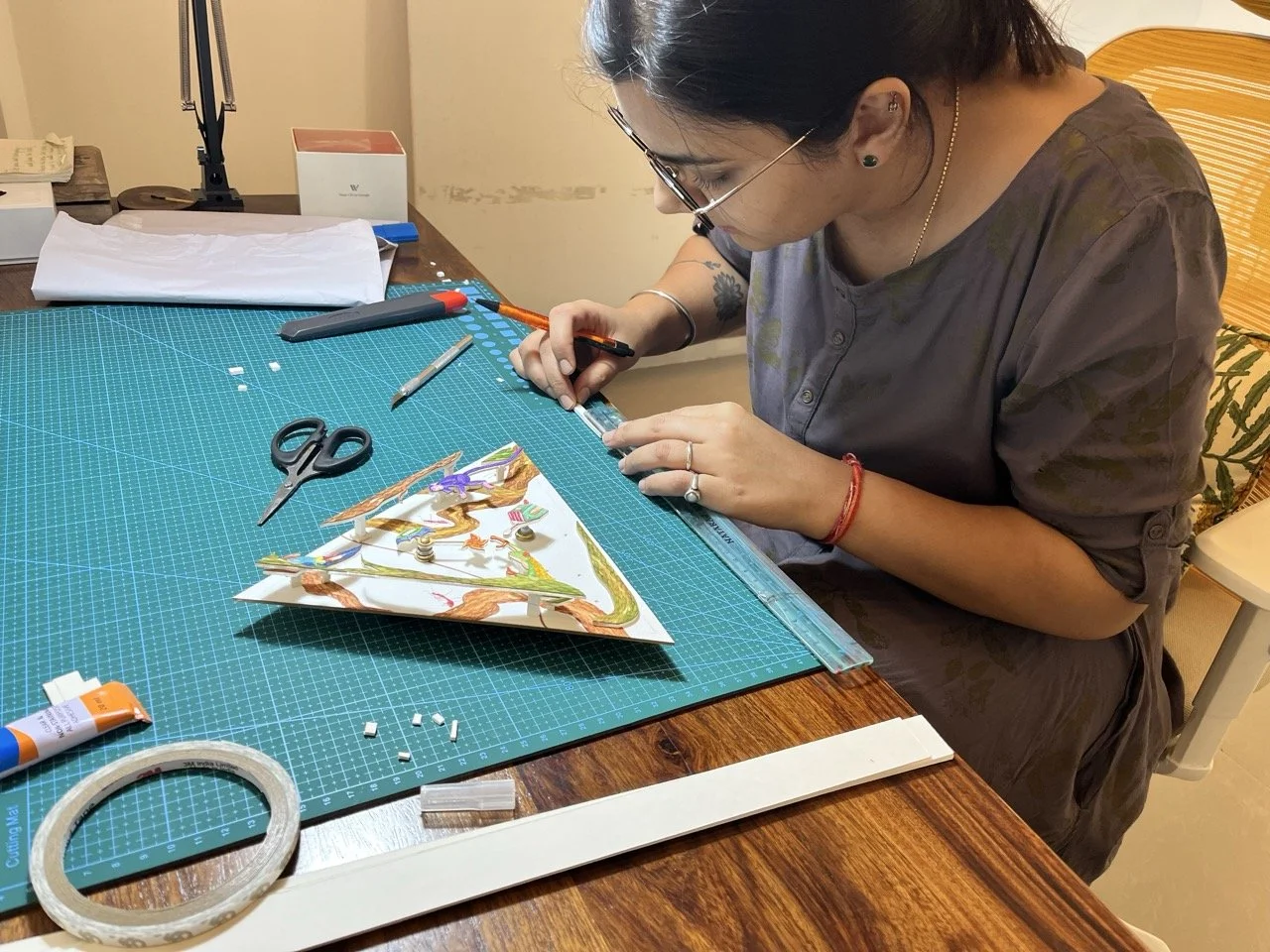
Her kinetic pieces, for instance, often build from clock mechanisms, turning paper into time itself. Movement becomes a metaphor for ephemerality; how little time we have, how tenderly it must be spent. Her Hindi series (with works titled Ann, Ghar, Seva, and Sukh and Hum) continues this thread - literally - using rotational movement to conjure memory, devotion, and rhythm, all the while resisting translation. This is deliberate. For her, Hindi is not just a language of fluency, but of feeling. Words like aap, she says, carry a softness that the English you cannot. Her language choices are part of her feminism; not the loud, didactic kind, but the lived, embedded kind. A feminism of practice, not proclamation.